What Comes to Mind When You Think of AI?
When asked about AI, most people would mention ChatGPT. This is understandable, as OpenAI is the pioneer of the current AI wave, and ChatGPT is the world’s first phenomenon-level AI product, with a valuation recently soaring to $852 billion.
However, several events this week may lead you to a completely different judgment about the AI industry’s landscape.
$852 Billion: Investors Are Starting to Doubt
First, let’s discuss OpenAI’s own issues. What does an $852 billion valuation mean? It exceeds that of most publicly traded companies globally. As a company that is still burning cash and has yet to turn a profit, this figure itself is a massive gamble.
This week, more and more investors have publicly expressed that this gamble is too big.
The core of the doubt is not whether AI has a future—no one questions that. The question is: why is OpenAI worth this much?
User growth for ChatGPT is slowing, and the conversion rate for enterprise subscriptions has not met expectations, while competitors are catching up at an astonishing pace.
In short: OpenAI’s technology is still strong, but the era of “AI = OpenAI” is coming to an end.
Anthropic: From Nobody to $30 Billion in Annual Revenue
Who is catching up? The answer may surprise you. It’s not Google or Meta, but a company that most people had never heard of two years ago—Anthropic.
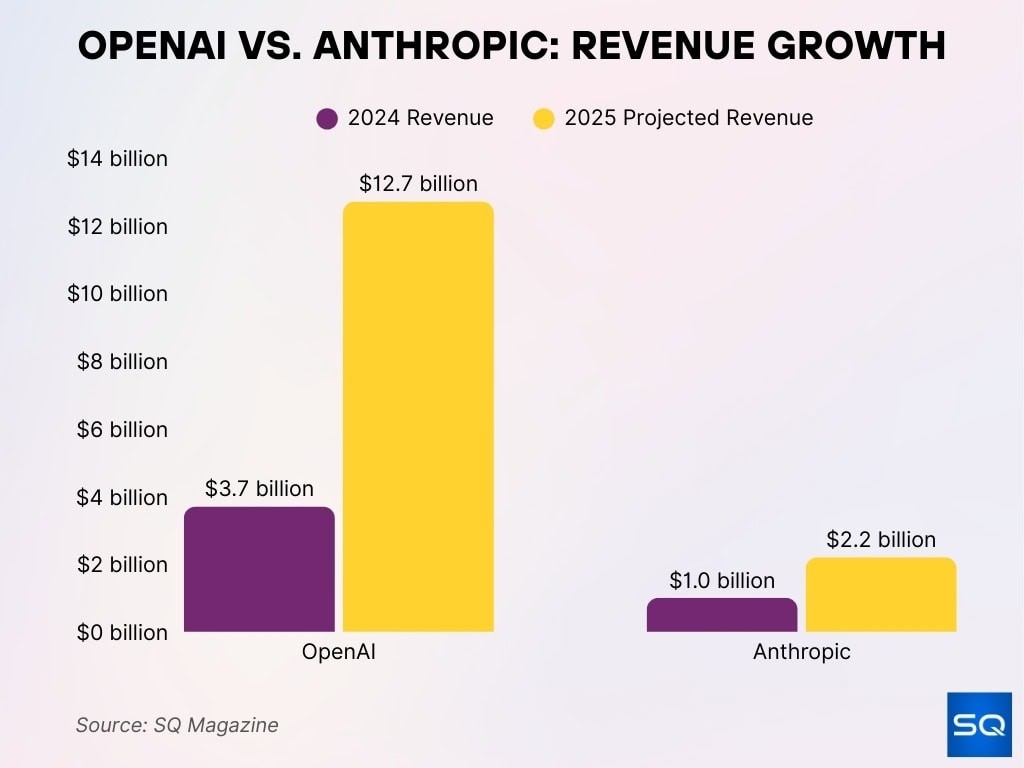
This week, it was reported that Anthropic’s annual revenue has surpassed $30 billion, officially exceeding OpenAI. Its market share among enterprise clients has skyrocketed from less than 10% a year ago to 30.6%.
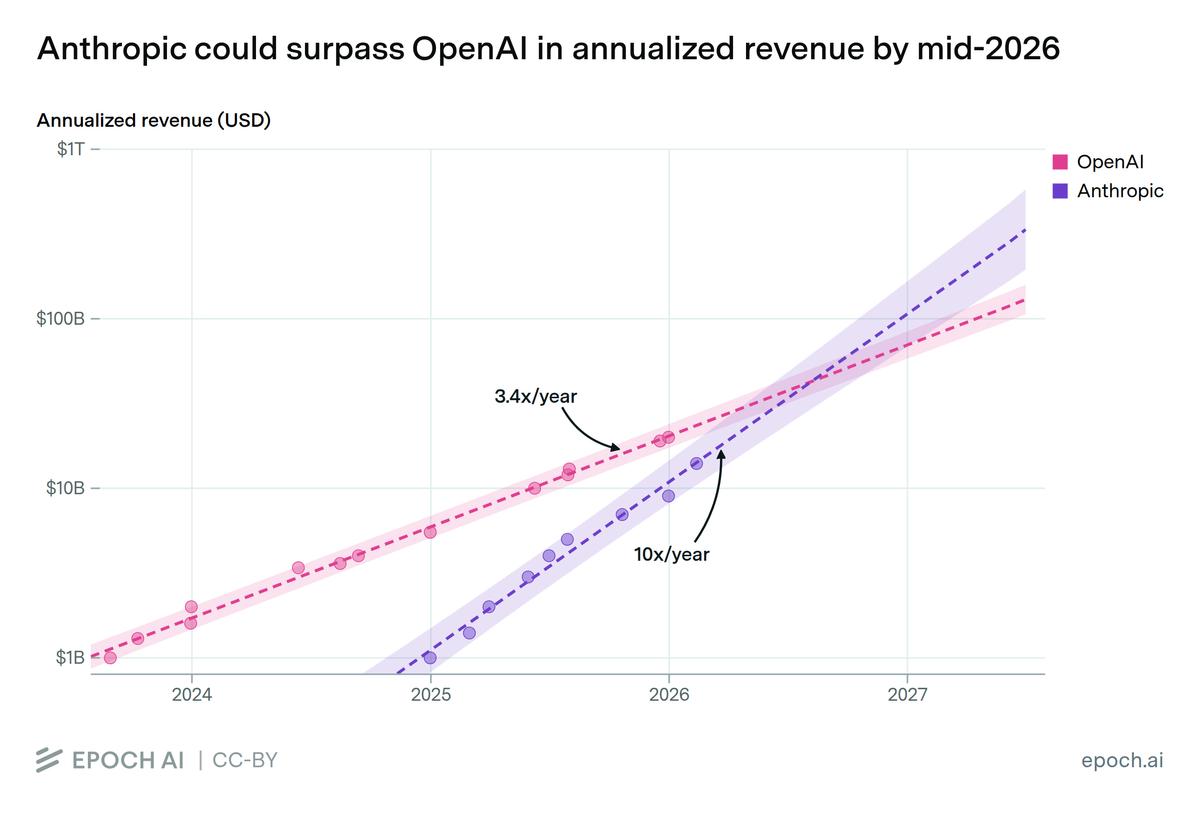
What does this mean? It means that enterprises—banks, law firms, consulting companies, and tech giants—are shifting their orders from OpenAI to Anthropic.
The reasons are straightforward:
First, Claude’s coding capabilities are stronger. Among programmers, Claude Code has become the first widely recognized AI programming tool. OpenAI’s Codex was released earlier but has received less favorable reviews than Claude.
Second, higher trust from enterprises. Anthropic has consistently promoted the concept of “safe AI,” providing better data privacy protection for enterprise clients. OpenAI has experienced too much internal turmoil in the past two years, leading many enterprises to question its stability.
Third, cost-effectiveness. For the same tasks, Claude’s token price is lower, and its output quality is on par with GPT-4. Enterprises are very pragmatic when it comes to costs.
The Real Battlefield: AI Coding
Many people focus on AI for chatting, drawing, and writing. However, the real battlefield that determines the AI industry’s landscape lies elsewhere.
The real main battlefield is coding.
One of the most noteworthy signals this week is that OpenAI, Google, and Anthropic have all increased their investments in AI programming.
Why is coding so important? Because whoever masters AI’s coding capabilities will control the future of the software industry.
The global software development market exceeds a trillion dollars. If AI can replace half of the entry-level programming jobs, that represents a $500 billion market.
Currently, the situation is:
Anthropic’s Claude Code—the best reputation among programmers, highest adoption rate by enterprises.
Google’s Gemini Code Assist—backed by the Android and cloud computing ecosystem, with immense potential.
OpenAI’s Codex/GPT—started the earliest but is losing its advantage.
Note the change in this landscape: a year ago, OpenAI was far ahead; now, it is a three-way competition. In the most lucrative coding sector, Anthropic is even leading.
China: Quietly Leading in AI Usage
After discussing the competition abroad, let’s look at the situation in China.
A little-known statistic is that China’s weekly usage of large models has exceeded that of the U.S. for five consecutive weeks, reaching 12.96 trillion tokens, making it number one globally.
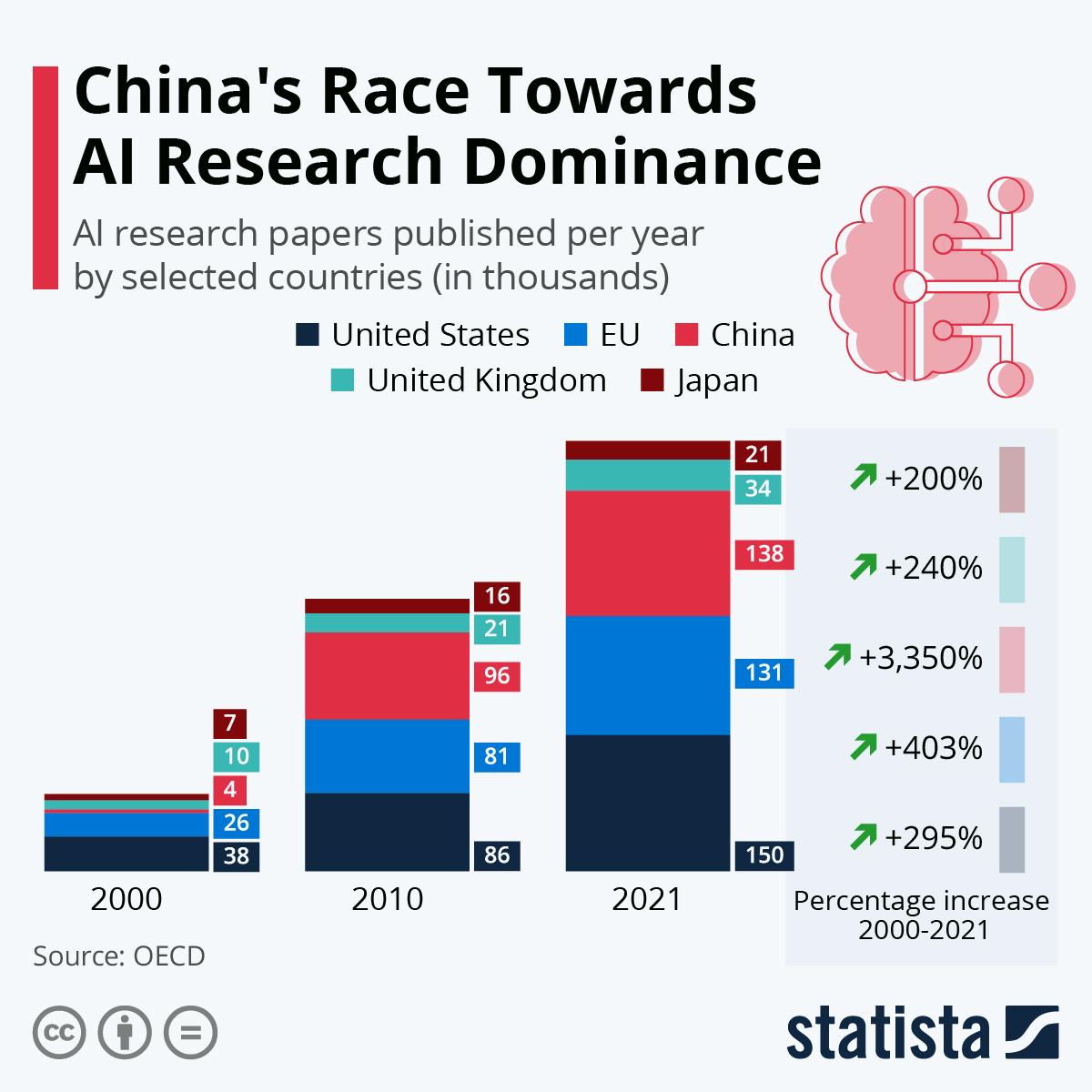
What does this number indicate?
It suggests that the speed of AI application in China may be much faster than most people realize. It’s not just large companies using it; many small and medium enterprises, individual developers, and even content creators are integrating large models into their daily work.
Interestingly, in the domestic discourse, perceptions of China’s AI still linger in the “catching up” phase. In reality, at the application level, it has already moved ahead.
Of course, leading in usage does not equate to leading in technology. There are still gaps in foundational model capabilities, chip supply chains, and depth of fundamental research. However, when it comes to actual usage, China is indeed the most proactive.
What Should Ordinary People Pay Attention To?
With all this talk about industry dynamics, what does it mean for the average person? It actually matters a lot:
First, don’t put all your eggs in one basket. If you are currently only using ChatGPT, consider trying Claude. It’s not that ChatGPT is bad, but having more options is always beneficial. Especially in scenarios involving coding, long documents, and complex logic, Claude’s performance may surprise you.
Second, pay attention to the speed of AI penetration in your industry. Coding is just the first industry deeply transformed by AI; design, law, finance, education, and more are all in line. Rather than waiting to be disrupted, it’s better to proactively learn and use AI.
Third, the speed of “changing kings” in the AI industry is much faster than you think. A year ago, OpenAI was dominant; now it’s a three-way competition. What will the landscape look like in another year? No one knows. The only certainty is that betting on a single company or product is the most dangerous move.
A new hand of cards is being dealt at the AI industry table. Do you only know ChatGPT?
Let’s discuss which AI you are using in the comments.
Comments
Discussion is powered by Giscus (GitHub Discussions). Add
repo,repoID,category, andcategoryIDunder[params.comments.giscus]inhugo.tomlusing the values from the Giscus setup tool.